
Mold is more than a smell and appearance issue. According to the CDC, people who spend time in damp, mold-affected buildings report higher rates of respiratory symptoms, asthma complications, allergic reactions, and other health concerns.
That’s why addressing mold quickly is critical not only for protecting your property, but also for protecting the health of those living inside it.
Mold remediation involves identifying moisture sources, containing and removing mold, and preventing recurrence. The process includes inspection, containment, air filtration, removal, sanitization, and restoration. Costs range from $500 to $15,000+ depending on severity. Professional remediation is essential to prevent health hazards and structural damage. Prevention requires controlling humidity, fixing leaks promptly, and ensuring proper ventilation throughout the home.
In this guide we will explore the complete mold remediation process, its costs, warning signs, and essential preventive measures to protect your home and health.
Understanding Mold Remediation
Mold remediation includes locating the source of mold, containing it, removing it, and stopping its growth. Mold remediation goes beyond just cleaning up what you can see; it’s about addressing the root problem, like water damage. The goal is also to stop mold spores from moving into parts of the building that aren’t already affected.
Basements, bathrooms, attics, and any space suffering from water damage provide ideal breeding grounds for mold. Because mold spreads rapidly, it’s crucial to bring in experts who focus on mold remediation.
Indicators That You Might Need Mold Removal Services
Knowing the early signs can help you save valuable time, effort, and resources. Here are some of the most frequently encountered signs:
- A continuous smell of mold
- The presence of black, green, or white spots on walls or ceilings
- Signs of water damage
- Any history of flooding or leakage
Symptoms similar to those of an allergic reaction, like coughing or sneezing
Steps in the Mold Remediation Process
Mold remediation involves several steps that are typically undertaken by a mold remediation company. The process includes:
- Inspection and Assessment
Before proceeding with the actual cleaning process, an assessment needs to be carried out. The process involves determining how widespread the mold is, figuring out what caused it, and using moisture tests to find all the areas affected by the mold. - Containment
Containment prevents the spread of mold throughout the property. It is done by setting up barriers using plastic sheeting and negative pressure systems. - Air Filtration
HEPA filters are positioned thoughtfully throughout a house, working to purify the air and capture mold spores that are floating around. - Mold Removal
In cases of extensive mold damage, affected materials need to be disposed of. In some instances, however, porous items can be salvaged after treatment. Other items, including non-porous surfaces, are cleaned with antimicrobial solutions. - Cleaning and Sanitization
This step involves cleaning the entire area with a biocide and sanitizing it. Deodorization is also done to eliminate unpleasant odors left behind after cleaning. - Restoration >
The final phase is all about repairs, replacing any compromised structural components to return the property to its former state. This might involve installing new drywall, applying a fresh coat of paint, or even fixing up the flooring.
Mold Remediation Cost – What Is It?
There are many different aspects that play a role in the cost of mold removal. The cost of cleanup depends on several factors. These include the size of the contaminated area, how serious the contamination is, and the specific location of the contamination within the building.
Average Costs Range Depending on the Extent of the affected area
- Type and degree of mold growth
- Structural damage and repair
- Access to the affected area
- Specialized tools are needed for removal
Although the cost is substantial, it is a small price to pay for prevention.
Why You Need Professional Mold Remediation
Trying to get rid of mold without the right tools or know-how can actually make things worse. Disturbing mold colonies can release more spores into the air, which just spreads the problem.
A professional mold remediation process will include:
- Complete removal
- Effective containment and air filtration
- Finding the cause of moisture
- Taking preventive measures
Professionals adhere to industry standards and use high-quality equipment to ensure effective work.
How to Prevent Mold Formation in Your Home
The second step in dealing with mold is to prevent its formation. To do this, there are several actions you need to take:
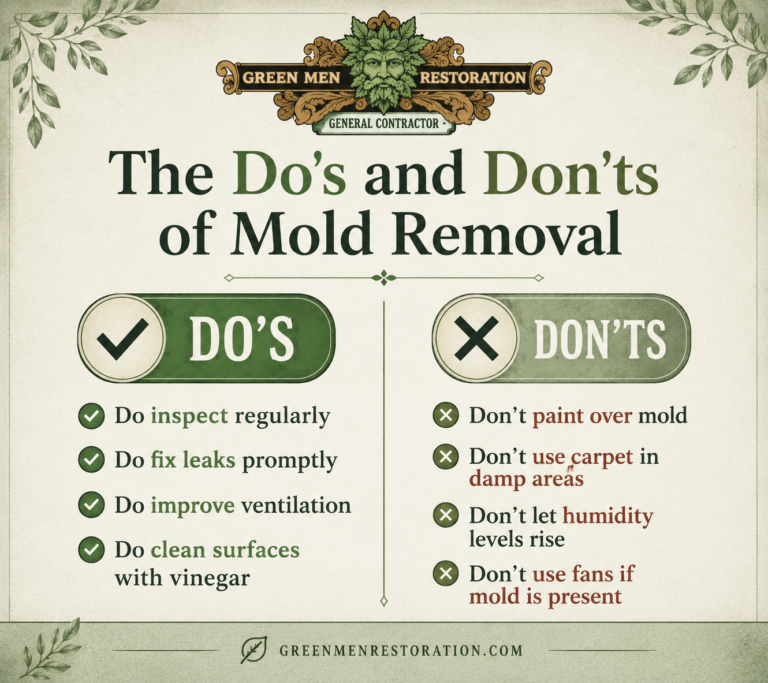
- Repair any leaks or water damage as soon as possible
- Keep the humidity indoors under 50%
- Have an exhaust fan installed in bathrooms and kitchens
- Ensure adequate ventilation around your house
- Check the presence of moisture regularly
Professional Help is Needed When?
In cases when mold affects a big portion of space, comes back again after removal, or there is some connection with water damage, then it is highly recommended to get professional help. Another case for getting help is when there are people’s health issues or when mold is growing in HVAC systems. Waiting can cause severe consequences. Addressing mold issues promptly protects both your property and your health. For reliable, professional support and long-lasting results, trust the expertise and proven solutions offered by Green Men Restoration.